Framing Lumber Prices, July 2026: Firmer, But Still Mixed by Species
Madison's broad framing index climbed through late June even as housing demand stayed soft. SPF looks supply-tight; SYP is splitting between softer benchmarks and firmer substitute grades.
The short answer
Framing lumber prices firmed through late June, but the market entered the month flat and cautious. Madison's broad cash index moved from $521 mfbm at the end of May to $538 mfbm for the week ending June 26 — up 0.9% week over week, 3.3% month over month, and 6.5% year over year according to NAHB's June 29 recap. That is a real improvement, not a breakout: mid-June commentary still described "some prices up, some down, some flat," and the gain looks driven more by supply discipline than by a resurgent housing market.
Species tell different stories. Western SPF looks better supported by lean Canadian mill output and duty-related supply constraints. Southern Yellow Pine is more bifurcated: benchmark grades corrected down from an earlier spring run-up, even as premium substitute grades firmed on demand from buyers replacing scarcer Canadian and European spruce.
Madison's weekly framing lumber index, late May through June
The broad cash-market benchmark shows a market that entered June flat and exited firmer.
| Week | Madison's broad index |
|---|---|
| Week ending May 29 | $521 mfbm |
| Week ending June 5 | $521 mfbm |
| Week ending June 12 | $524 mfbm |
| Week ending June 19 | $533 mfbm |
| Week ending June 26 | $538 mfbm |
Source: Madison's Lumber Prices Index, published weekly through June 26, 2026; NAHB Framing Lumber Prices recap, June 29, 2026.
SPF vs. SYP: not moving in lockstep
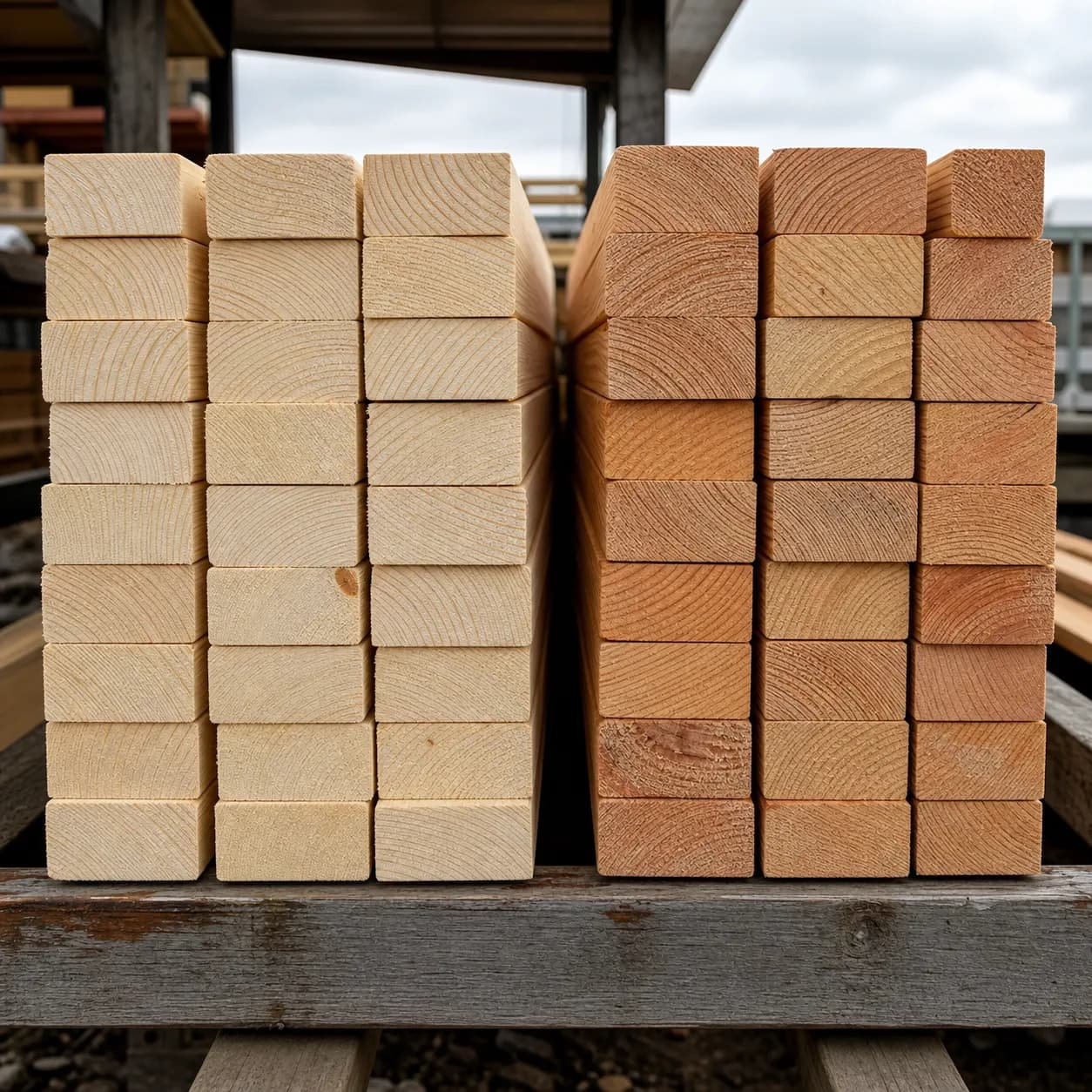
SPF is more directly exposed to Canadian supply tightness and the ongoing softwood duty review, while SYP has more domestic Southern production and more internal grade stratification — it can soften on weak core housing demand while still gaining business in specific substitute lanes.
Why the market firmed while demand stayed soft
Housing data did not improve. US Census reported May 2026 total housing starts at 1.177 million SAAR, down 15.4% from April and 8.7% year over year; single-family starts were down 1.9% from April even as single-family permits rose 0.6%. NAHB's June Housing Market Index fell to 35, with 35% of builders cutting prices and 62% using sales incentives. Mortgage rates offered only limited relief — Freddie Mac's 30-year fixed averaged 6.43% on July 2, down slightly from the prior week but still restrictive.
Supply discipline is doing more of the work than demand. NAHB, citing Federal Reserve data, said US sawmill production declined for a second consecutive quarter in Q1 2026. West Fraser reiterated combined SPF and SYP shipment targets of just 2.4 to 2.7 billion board feet for 2026, citing 2025 sawmill closures. Canfor and Weyerhaeuser both described a market where periods of supply tightness improved benchmark pricing even against subdued underlying demand.
Futures moved faster than cash on a monthly basis. Trading Economics showed lumber at $623.50/1,000 board feet on July 2, up 4.35% over the prior month, with CME's nearby contracts clustered in the low $620s. Futures and cash are different markets, though — futures reference an exchange contract, not a delivered price, and the two can diverge week to week.
Channel behavior remains hand-to-mouth. Buyers are ordering for immediate needs rather than restocking, and Northeast retail customers have leaned on just-in-time purchasing — a pattern that can amplify small supply changes into price moves without a visible demand surge behind them.
What buyers should do, by role
Frequently asked questions
Keep watching
Watch the July 16 NAHB Housing Market Index release and the July 17 Census new residential construction release for June data, and track the weekly lumber forecast for how these indicators are feeding into pricing. For the demand-side leading indicators behind this market, see housing starts and lumber demand, and for how LumberFlow tracks these signals against active quotes, see lumber market analysis.
For the sales-growth side of the market, read how lumberyards find and prioritize new construction leads and building permit data for lumber sales.
Sources
- Madison's Lumber Prices Index, June 26, 2026; NAHB Framing Lumber Prices, June 29, 2026
- Canadian Biomass Magazine, North America softwood lumber market update: Q2 2026 (June 30, 2026)
- Fastmarkets, SYP substituting for tightening Canadian and European spruce (June 19, 2026)
- US Census Bureau / HUD, Monthly New Residential Construction, May 2026 (released June 16, 2026)
- NAHB, Builder Sentiment release, June 15, 2026
- Freddie Mac Primary Mortgage Market Survey, July 2, 2026
This page is for informational purposes and reflects public data available as of July 3, 2026. Futures references are not delivered cash prices. LumberFlow does not provide financial or investment advice.