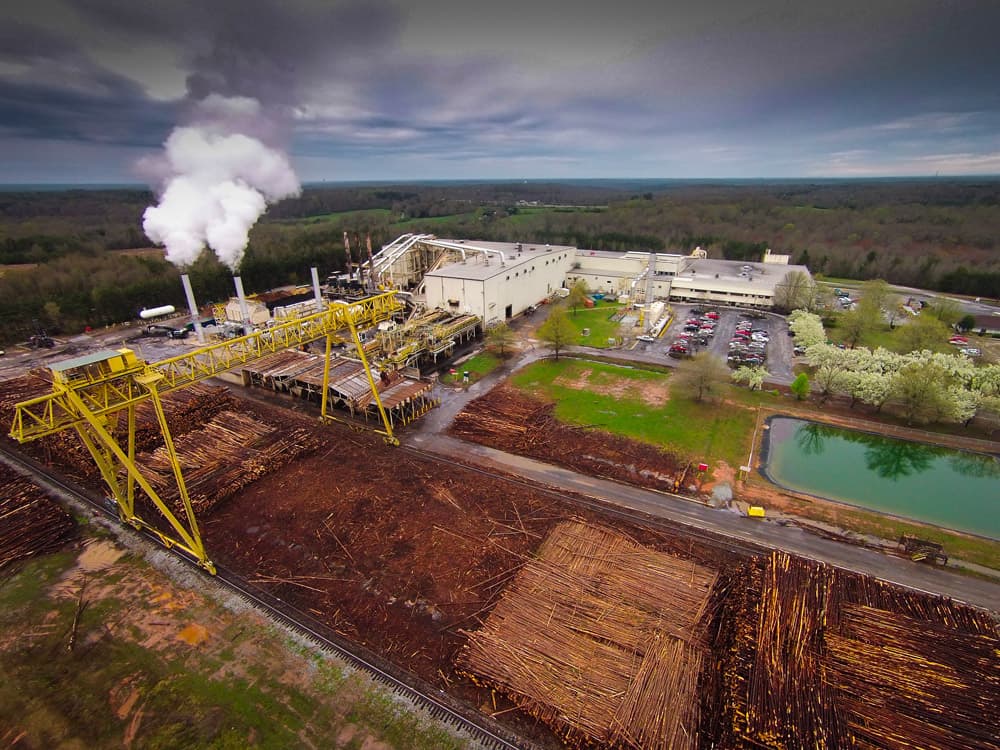
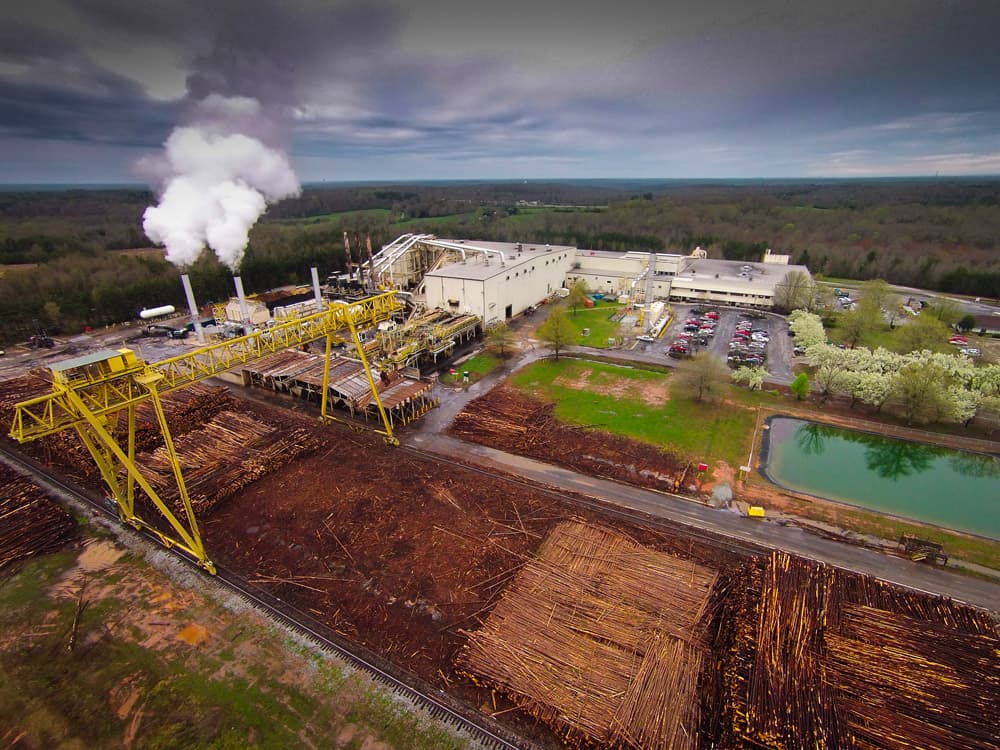
Marks Lumber Shuts Montana Mill as CME Drops to $523 in 2026
Marks Lumber closure and an 8.32% drop in CME futures to $523/MBF signal weaker Q4 2026 lumber prices. Procurement actions for retail yards.
Marks Lumber will end sawing operations at its Clancy, Montana sawmill on November 6, 2026, liquidating specialty Douglas fir inventories through 2027. This closure comes as CME lumber futures dropped 8.32% over 30 days to $523.50/MBF amid weak single-family housing starts. Distributors should negotiate $10 to $15/MBF discounts below print on prompt tallies while maintaining a strict 10 to 14 day inventory cap throug…
Radar · free beta
The construction projects in your territory are already compiled. See the ones worth a call.
Impact on Your Procurement Strategy
Marks Lumber announced it will permanently end custom sawing operations in Clancy, Montana on November 6, 2026, marking the end of a 75-year-old regional institution and adding to the tally of 50 North American sawmills shuttered or curtailed over the past 24 months. While Steve Marks cited family considerations, elevated log acquisition costs and persistent litigation over regional federal timber sales forced the decision. The mill will stop accepting specialty orders on October 20, 2026, retaining four staff members through 2027 to sell through residual inventory. While specialty Douglas fir, circle-sawn flooring, and timber supply in the Northern Rockies will tighten regionally, the broader North American dimensional lumber market continues to grapple with systemic oversupply relative to slowing residential consumption. Independent retail yards across Montana and Idaho that rely on Clancy for custom timber cuts must immediately audit their active framing schedules to prevent supply gaps on non-standard dimensions.
Downstream framing consumption faces significant headwinds as single-family residential construction decelerates into the fourth quarter of 2026. U.S. single-family housing starts dropped 15.7% year-over-year to an annualized rate of 808,000 units, hampered by 30-year fixed mortgage rates averaging 6.76%. Building permits also softened to an annualized pace of 1.394 million units, demonstrating a direct correlation between housing starts and lumber demand. Conversely, nonresidential construction added 16,100 jobs in September 2026, and NAHB Associate member median revenue rose 12% to $3.4 million in 2025, driven by trade subcontractors. However, commercial stability and remodel activity are not soaking up enough board footage to offset lagging single-family framing packages. Pro-dealers focused heavily on residential tracts are seeing truss plant delivery backlogs shrink, freeing up regional inventory that distributors originally booked for early autumn starts.
Extensive capacity rationalization across North America has failed to establish a price floor under structural wood products. CME lumber futures tumbled 8.32% over the trailing 30 days to settle near $523.50 per thousand board feet, touching a 10-month low of $526.50 on the weekly close. Canadian producers remain penalized by combined anti-dumping, countervailing, and Section 232 duties totaling 45.16%, though upcoming U.S. Department of Commerce administrative reviews in October 2026 could lower net cash deposit rates closer to 35%. Concurrently, an executive order issued on October 5, 2026, granting temporary federal excise tax relief on off-road dyed diesel used on highways provides marginal freight relief of 24.4 cents per gallon, shaving freight surcharges on intermodal and flatbed shipments through December 31, 2026. This transportation adjustment gives freight carriers a minor cost cushion, allowing wholesalers to offer slightly sharper delivered pricing on transit loads into upper Midwest and Mountain West reload centers.
Commercial sales managers must pivot account targeting toward commercial subcontractors and multifamily projects in the Mountain West and Midwest, where nonresidential payroll expansion is sustaining job site deliveries. Sourcing desks should maintain a defensive posture by holding yard inventories to lean 10 to 14 day order buffers rather than booking fourth-quarter speculative blocks. Dimensional framing prices continue to soften directionally, and procurement teams tracking current lumber prices and weekly forecast metrics should leverage low order file backlogs to extract concessions from primary sawmills. Committing to block buys in a falling market exposes yards to severe inventory devaluation, especially when replacement carload prices drop faster than retail counter quotes can turn. Sourcing managers should instead favor mixed-truck purchases from regional reloads to protect working capital while preserving daily fulfillment flexibility.
Regional Douglas fir buyers requiring heavy timbers or custom circle-sawn patterns must submit structural tallies prior to the October 20, 2026 deadline or establish supply partnerships with Idaho and Oregon specialty mills. Across high-volume Western SPF and Southern Yellow Pine 2x4 and 2x6 tallies, mill order files remain compressed inside of two weeks. Because price indicators show persistent downward trajectory without technical stabilization, procurement leads hold clear pricing leverage into late October 2026. Buyers can push for guaranteed delivery dates and $10 to $15/MBF discounts on prompt Western SPF and Southern Yellow Pine tallies, forcing mills to carry the inventory risk until building starts show demonstrable recovery.
Key Takeaways
Marks Lumber ends Montana sawing operations on Nov 6, 2026; custom Douglas fir orders close Oct 20.
CME futures hit a 10-month low of $523.50/MBF as single-family housing starts fell 15.7% year-over-year.
Cap structural lumber inventory at 10 to 14 days forward cover and capture $10-$15/MBF discounts on prompt loads.
Market Outlook
Pricing Trend: DOWN
Confidence Level: MEDIUM
Recommended Action: Negotiate $10 to $15/MBF discounts below print on prompt SPF and SYP tallies while capping yard inventory at 10 to 14 days through October 2026.
How will the Marks Lumber closure affect Douglas fir supply in late 2026?
The closure removes regional custom Douglas fir cutting capacity in Montana after November 6, 2026. While residual inventory will be sold through 2027, buyers needing custom timbers or circle-sawn stock must submit orders before October 20, 2026, or transition volume to Pacific Northwest specialty mills.
Why are framing lumber prices falling despite 50 mill curtailments in 2026?
Single-family housing starts dropped 15.7% year-over-year to an annualized rate of 808,000 units amid 6.76% mortgage rates. CME lumber futures dropped 8.32% over the last 30 days to $523.50/MBF because housing demand contracted faster than producers reduced output.
How LumberFlow Helps
Find the next project. Make the right buy. LumberFlow is lumber software for sales and procurement.
Sales — LumberFlow Radar (Private Beta). Know which local construction projects to call on next. Radar ranks supported municipal permit activity into a daily project queue your outside reps review, claim, and disposition, with visible reason codes behind every ranking. The same public building activity behind this data is visible to every dealer in your territory right now — Radar turns it into a daily queue your reps can act on before someone else does.
Any territory: build your own prioritized call list with the free lead-prioritization field guide. Radar is live in markets across Nebraska, Ohio, Texas, and Washington. Activation is by invitation — request an activation invite and tell us where your team sells.
Buying — LumberFlow Procurement. Use the weekly price forecast to confirm mill price floors before issuing RFQs, and monitor shifting freight costs via free daily market insights. Sourcing teams working inside LumberFlow leverage agentic sentiment analysis to expose regional margin compression and secure below-replacement pricing on prompt dimensional loads. Book a 20-minute demo of the separate buy-side product.
Radar · free beta
See which local construction projects are worth a call
Radar ranks the local construction takeoffs by profitability potential and deal size, gives each job pack an owner, and keeps follow-up visible. The projects in your territory are already compiled.
Related Insights
Continue exploring lumber market analysis